Student Wellbeing
The Academy has a range of policies and procedures in place that ensure the welfare of all of our students. Several of these policies set out expectations about good behaviour. This means everyone feels safe and can learn, this includes good learning behaviour around the Academy and in lessons and also rules about how you communicate and behave appropriately towards other students and staff.
Anti-Bullying
Students can use the Sharp System at any time to report any incidents of bullying or speak to their faculty FCO. Students are also encouraged to talk to any member of staff they feel comfortable disclosing sensitive information too. All issues reported will be passed onto members of our On Call team. Click on the Sharp System Logo below to report any incident.

|
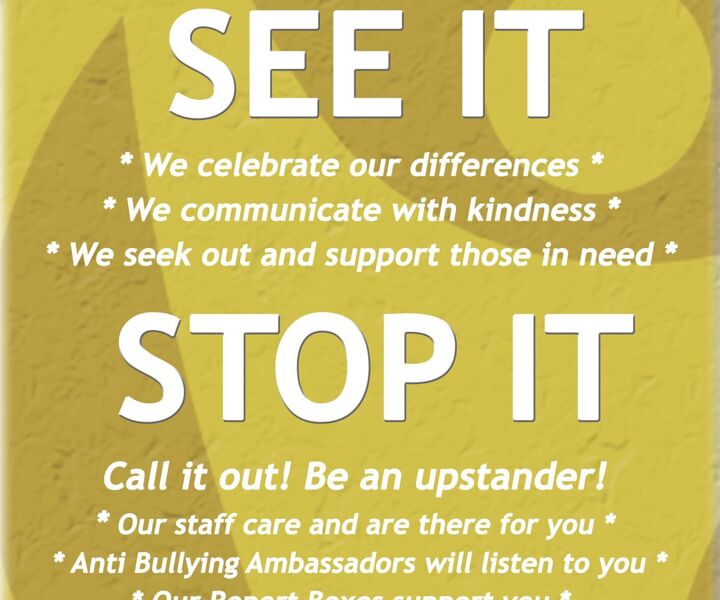
| We make a stand against bullying |
Bullying information and support for parent/carers
It is always emotive for Parents/Carers when they find out that their child has been involved in a bullying incident. This is perhaps even more so when they are made aware that their child has been exhibiting bullying behaviour towards others.
One just needs to remember that bullying is not a person but rather a behaviour that anyone is capable of. The critical thing is to recognise this and to encourage some dialogue between yourself and your child to establish the facts. We have compiled some information and tips to help you to identify what bullying is and how to spot the signs.
8 tips if your child is bullying others
Your child has told you that they are being bullied - what is next?
-
1. Stay calm and reassure your child that you will do everything you can to stop the bullying.
- Make contact with us immediately. Notify us of what is happening and ask us to put a support plan in place to support your child whilst the issue is being dealt with.
3. Consider speaking with your GP in the interim, if you feel your child’s physical or emotional health is being affected.
What to do and not to do
DON'T:
-
DON’T confront other parents or the child / young person about the behaviour. When emotions are running high, things can quickly get out of hand!
- DON’T take to social media to vent your anger! Making comments which could cause further harm or distress to another individual is a criminal offence Under the Malicious Communications Act and you could be visited by the Police! Remember the age of criminal responsibility in England is 10 years of age so this one applies to your children too! When information is out there, it’s out there!
- DON’T tell your child to fight back. This can result in an escalation of the problem and your child may then incur a sanction.
- DON’T tell your child to “Toughen up, lots of people get bullied, and you have to learn to deal with it!” There is always a power imbalance when a child is being victimised and adults need to intervene to redress the power imbalance
DO:
- DO contact us at school and ask to speak with the person who is responsible for tackling bullying. This member of staff will address the allegation of bullying and investigate the incident thoroughly.
- DO consider, if your child is experiencing bullying in the community because of a disability, if it could be a ‘Hate Crime’ and, if so if it needs to be reported to us in the first instance and then the Police if necessary.
- DO reassure your child and ask them what they think could be done to make them feel safer. Their ideas can then be shared and used to inform any future support plans
- DO screenshot any offending remarks that have been made on social media to provide evidence of the victimisation and keep a diary of events
- DO contact the police on 101 if your child has suffered a serious assault
- DO model a positive and considered approach to the problem (harder said than done, we know)! This will give your child an extra sense of security and reassurance.
If the bullying is happening online
Whether you are confident online or are not sure where to start here are some tips that might help you further:
-
Spend time with your children online, and have them show you their favourite sites. Speak to them about what they are doing on social media: Snapchat, Instagram and Whatsapp etc
- Speak to your child about staying safe online and teach your children “cyber ethics”
- Be computer savvy: use antivirus, antispyware, and a firewall, and keep them updated
- Agree on rules for using the Internet
- Teach your children to tell a parent, teacher or trusted adult if they feel uncomfortable about anything they’ve seen on a computer or online
- Keep communication flowing so your child or young person feels able to talk to you about whatever they are doing online
Further help and Support
Please rest assured that we take all allegations of bullying very seriously.
Feel free to look at our HAMD Anti-Bullying Policy
- Anti-bullying Alliance: an anti-bullying tool for parents and carers
- If you would like support and advice, you can talk to a family support worker at Bullying UK on their confidential helpline on 0808 800 2222.
- Kidscape is a small charity that provides information, training, and support for parents and children facing problems to do with bullying. Parent Advice Line: 07496 682785.
- Think you know - for advice on all things digital safety
- Internet Matters – for more information about cyberbullying and online safety
- Am I a bully? If you think your child is bullying others, this BBC guide may help them reflect on their behaviour
- Bullying Parents Guide to Support – YoungMinds
Anti-Bullying Week 2025
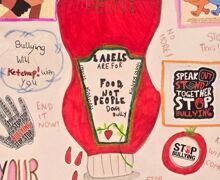
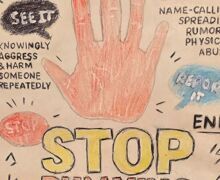
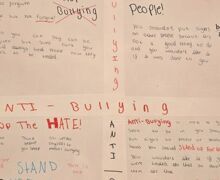
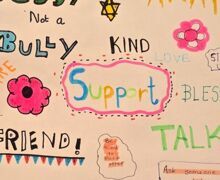
Our Anti-bullying ambassadors recently held an anti-bullying poster competition, and we were thrilled with the number of creative and powerful entries we received. It was a tough decision, with so many students showcasing their passion and insight. After much deliberation, we’re excited to announce our top four winners:
1st Place: Ismat, Jessica & Krisha
2nd Place: Maryam
3rd Place: Stevie-Lee
4th Place: Jenina
A huge thank you to everyone who participated—your voices are helping create a kinder, more inclusive environment for all.
Level 1: In-house support:
- Careers Advisor
- Emotionally Based School Avoidance (EBSA) intervention.
- Emotional Literacy Support Assistants (ELSA)
- Emotional Regulation intervention
- Food parcels
- Free School Meals uniform voucher
- Hardship fund for school uniform and shoes
- Health and Safety Risk Assessment.
- Lego based Therapy (Social Communication programme)
- One to one support
- Phone-calls home by Tutor/Faculty Coordinator
- Mediation between students /between a child and their parent
- Meetings by Tutor/Faculty Coordinator
- Part-time Timetable (individual support for a pupil – tailored to meet their specific need)
- PSHE, SMSC and Wellbeing programme
- Medical cards
- Safe space in school
- Safety Plan: Initiate a plan to support the student to keep safe.
- Team around the Child/Family meeting
- Truancy bus - support for parents who are struggling with their children who refuse to come to school in the morning.
- Welfare visits to family home
Provision provided by the Student Referral Centre (SRC)
- Individual Intervention Plan
- Pastoral Support Plan
- ​One to one support and advice sessions – (Extended targeted sessions conducted with students completing long stay SRC)
- Sanction related PowerPoint sessions
- One to one friendship support group
- Conflict mediation
- Anti-Bullying intervention and support
- Anti Bullying student ambassadors
- Self-Esteem workshop
- Peer Leaders to support Year 7 tutor groups transitioning
- Football Beyond Borders Intervention
- Anxiety/mental health support (1:1 and small group work)
- Strengthening Minds anger management programme (small group work)
- Y7 Transition programme – (small group work)
Between the Lines (small group work)
Level 2: Early help:
- CATCH 22 - work with young people and families in trouble, providing early intervention, targeted and specialist support services to those in crisis, leaving care, missing from home or with substance misuse or mental health problems
- Children Missing from Education
- Counsellor – in-house Catch 22
- Wave 6 Cluster group - targeted for students struggling with anxiety to be supported by an Education Wellbeing Practitioner
- Free2B offer support to LGBTQ+ pupils and their families.
- Glasshouse Project – for students with family members in prison or are victims of crime.
- Jigsaw4u - bereavement and emotional support
- Jigsaw4u – ‘Piece of Mind’ - 1:1 support for emotional wellbeing
- Jigsaw4u – young runaways service to support young people
- Merton Medical Education Service (Lavender Campus) – for students struggling with significant medical or mental health needs
- My Futures Team (support young people aged 13-19 in Merton at risk of becoming Not in Education, Employment or Training (NEET).
- Signpost families towards ‘One Stop Shop’ which is a confidential service for people experiencing domestic violence or abuse in Merton. Venue: Morden Baptist church – 9.30-12noon every Monday.
- Off the Record counselling service
- Parenting programme
- School nurse – Hamimah Semambo.
- Social Prescribing: https://enablelc.org/cypmerton (offer 6 sessions of counselling to students 14+
- Social Worker in Schools Project – The Social worker can offer support to any family residing in Merton. Keisha Coleman
- Spectra (Sexual health and emotional wellbeing).
- Victim Support: 0808 16 89 111.
- Young Carers
Level 3:
- Referral to Children’s social care (CSC) for targeted intervention. Student placed on a Child in Need Plan
- Contextual Safeguarding Intervention: Child Sexual Exploitation, Child Criminal Exploitation, Missing, Serious Youth violence.
- Special Educational Needs and Disability (SEND):
- Educational Psychologist to consider whether an assessment of student’s SEND is required
- SENCo to complete an assessment for an Educational Health Care Plan (assessment of students SEND)
- Referral for a Speech and Language assessment
- Consultation with a CAMHS clinician for a student displaying mental health concerns.
- Referral to Child Adolescent Mental Health service (CAMHS) for a mental health or neuro-development assessment
- Youth Offending team intervention when a student receives a Youth referral order
- CAMHs crisis line number: 020 3228 5980 – Open between Monday-Friday 5pm -11pm
- Saturday-Sundays and Bank holidays 9am - 11pm.
- Rae Project - a recovery programme for 9 to 16 year old's exposed to Domestic Violence in the home.
Level 4:
- Referral to (CSC) for targeted intervention requiring a student to be placed on a Child Protection Plan – DSL will attend every meeting on and off site. The student will be monitored closely, and the DSL will work as part of a multi-agency team to support the student and their family.
Student Welfare